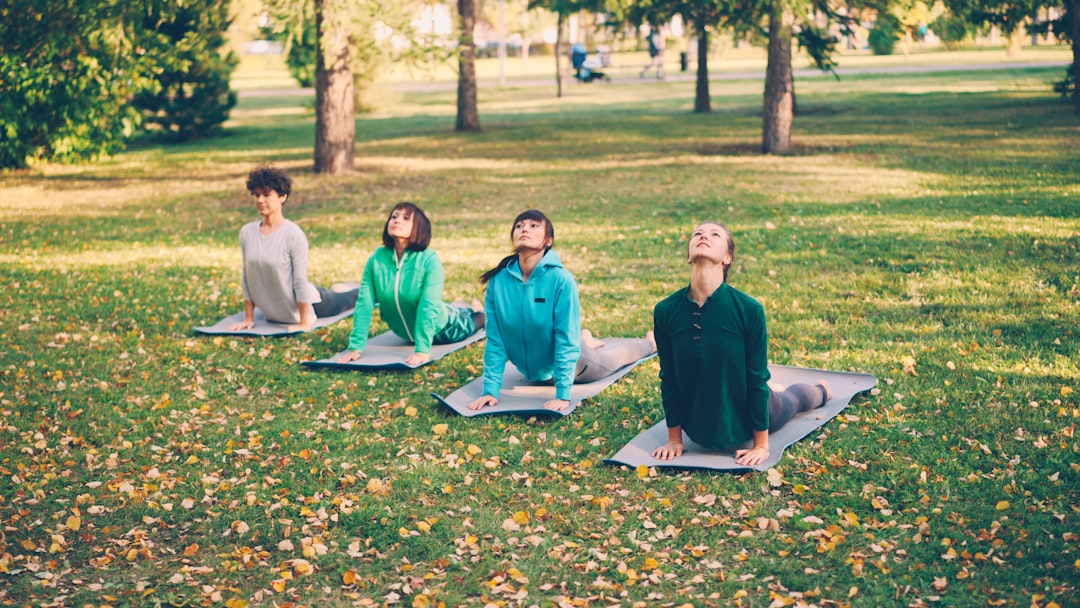

“The next time someone tells you to ‘just calm down,’ remind yourself that your anxiety is not a flaw — it is a signal your body is trying to protect you from something real.”
Sis, let me ask you something real. Have you ever been in the middle of a full-blown anxiety spiral — heart racing, palms sweating, brain screaming — and someone hit you with the classic “just calm down”? Girl, I know you have. We all have. And let me tell you something: that phrase is not just useless. It is actually damaging.
Here is the thing about anxiety: it does not respond to logic when it is in full swing. Your brain is literally in fight-or-flight mode. The part of your brain that processes reason and rational thought? Yeah, that part goes offline when your anxiety is activated. So telling someone with anxiety to “calm down” is like telling someone drowning to “just breathe.” It misses the point entirely.
I have been there. I have been the girl crying in a bathroom stall before a final, the girl lying awake at 3 AM replaying every awkward thing I said in a conversation, the girl canceling plans because the thought of being around people felt like climbing a mountain in flip-flops. And every single time someone told me to relax, I felt more alone, more broken, more convinced that something was wrong with me.
Anxiety affects 1 in 5 young women — and almost none of us were taught how to actually handle it.
Let that sink in for a second. You are not alone. You are not broken. You are not the only one who feels like your brain is working against you sometimes. The problem is not that you have anxiety. The problem is that nobody taught you what to do when it shows up.
Why “Just Calm Down” Is the Worst Advice for Anxiety
Okay, let me break this down for you. When someone tells you to calm down while you are experiencing anxiety, here is what actually happens in your brain. First, your amygdala — that little almond-shaped part of your brain that processes fear — goes into overdrive. It perceives the “calm down” comment as additional pressure, which makes your anxiety spike even higher. Second, the logical part of your brain (your prefrontal cortex) is essentially taking a nap right now. It cannot process the instruction to “calm down” because it is not fully online.
So what you end up with is a double whammy: you feel more anxious AND you feel ashamed for not being able to calm down. That shame creates a feedback loop that makes your anxiety worse. It is a trap, and society has been feeding it to us forever.
Think about it this way. If you had a broken leg, nobody would tell you to “just walk it off.” If you had the flu, nobody would say “just stop being sick.” But because anxiety is invisible, people treat it like it is something you can just switch off. That is not how it works, girl. And I need you to know that.
💡 Quick Tip
Next time someone tells you to calm down, try saying this: “I appreciate you trying to help, but my anxiety doesn’t work that way. What I actually need right now is [space/to breathe/for you to listen].” Setting that boundary is not rude — it is self-preservation.
What Anxiety Actually Feels Like (And Why It Is Not Your Fault)
Let me paint you a picture of what anxiety really feels like, because I think we need to stop pretending it is just “being nervous.” Anxiety is not the jitters before a presentation. Anxiety is your brain convincing you that every single person in that room is judging you, that you are going to mess up irreversibly, and that your entire future hinges on this one moment. It is catastrophic thinking on steroids.
Anxiety can show up as physical symptoms too. Maybe your chest feels tight, your stomach is in knots, your hands are shaking, or you feel like you cannot get a full breath. Maybe you feel dizzy or like the room is closing in. These are not signs that you are weak. These are signs that your nervous system is doing exactly what it evolved to do — trying to keep you safe from a perceived threat.
The problem is that your nervous system cannot always tell the difference between a real threat (like a car coming at you) and a perceived threat (like a text from your boss that reads “can we talk?”). So it goes into protection mode. And that protection mode? It feels like hell.
| What People Think Anxiety Is | What Anxiety Actually Is |
|---|---|
| ❌ Being a little stressed or worried | ✅ A full-body nervous system response that feels like an emergency |
| ❌ Something you can just “snap out of” | ✅ A physiological state that requires specific tools to regulate |
| ❌ A sign you are weak or broken | ✅ A sign your brain is trying to protect you (even if it is misfiring) |
Here is the truth nobody tells you: anxiety is not something you cure. It is something you learn to work with. And the sooner you stop fighting it and start understanding it, the sooner you can actually feel better.
💊 What Works: The Anxiety Toolkit by Dr. Alice Boyes – This book is basically a manual for your anxious brain. It gives you actual strategies, not just “breathe deeply” fluff. I have read it three times and I find something new every time.
What Actually Works When Anxiety Hits
Okay, so if “calm down” does not work, what does? I am so glad you asked, because this is the part where I actually give you something you can use. And I am not going to tell you to meditate for an hour or do some complicated breathing exercise that you will forget the second your anxiety spikes. I am going to give you real, practical, phone-in-hand strategies that actually work.
First up: grounding. When your anxiety is screaming at you, your brain is stuck in the past (replaying mistakes) or the future (predicting disasters). Grounding pulls you back into the present moment. The 5-4-3-2-1 technique is my go-to. Name 5 things you can see, 4 things you can touch, 3 things you can hear, 2 things you can smell, and 1 thing you can taste. It forces your brain to focus on sensory input instead of anxious thoughts. It takes about 60 seconds and you can do it anywhere — in a bathroom stall, at your desk, in your car.
Second: movement. Anxiety is energy trapped in your body. If you do not release it, it just sits there and builds up. You do not need to run a marathon. Stand up and shake your hands out. Do 10 jumping jacks. Walk around the block. Dance to one song in your room. Movement tells your nervous system “the threat is gone, we can relax now.” It is one of the fastest ways to lower anxiety because it physically burns off the stress hormones.
Third: name it to tame it. Anxiety thrives in vagueness. When you feel that wave of panic, stop and say out loud: “I am experiencing anxiety right now. This is my nervous system trying to protect me. This feeling will pass.” By naming it, you activate the logical part of your brain and create distance between you and the feeling. You are not your anxiety. You are someone experiencing anxiety. That distinction matters more than you think.
90% of anxiety attacks peak and start to decrease within 10 minutes — you just have to ride the wave, not fight it.
Let me tell you something that changed my life: anxiety is not a problem to be solved. It is a signal to be understood. When I stopped trying to eliminate my anxiety and started asking “what is this trying to tell me?” everything shifted. Sometimes my anxiety is telling me I am overcommitted. Sometimes it is telling me I need to set a boundary. Sometimes it is just my brain being a little overprotective. But once I started listening instead of fighting, the anxiety actually started to quiet down.
The Truth Nobody Tells You About Anxiety
Here is the insider secret that changed everything for me: anxiety is often a sign that you are living outside your values. Think about it. When are you most anxious? For me, it was when I was saying yes to things I did not want to do, people-pleasing at my own expense, and ignoring my own needs. My anxiety was not the problem — it was a symptom of the fact that I was not living in alignment with what I actually wanted.
I am not saying all anxiety is caused by misalignment. Sometimes it is genetic, sometimes it is chemical, sometimes it is trauma. But for a lot of us, our anxiety is a messenger. And when we start listening to it — really listening — we start making changes that reduce the anxiety at its source.
“Your anxiety is not your enemy. It is your inner alarm system. And alarms are not meant to be silenced — they are meant to be investigated.”
Think about the last time your anxiety was really bad. What was going on in your life? Were you overworking? Were you in a toxic friendship or relationship? Were you ignoring your own boundaries? Were you comparing yourself to everyone on social media? Often, our anxiety is pointing us toward something that needs to change. And when we make that change, the anxiety naturally decreases.
This is why I love the TechMae community so much. It is a space where we can talk about this stuff without judgment. Where we can say “my anxiety is kicking my ass today” and get a response that is not “just calm down” but “I see you, I hear you, here is what helped me.” That kind of support is medicine, sis.
How to Support a Friend With Anxiety (Without Saying “Calm Down”)
Okay, real talk: you are probably going to encounter friends who are dealing with anxiety too. And you want to help, but you do not know what to say. Let me give you the script. Instead of “calm down,” try these:
- “I am here with you.” Simple, present, non-judgmental.
- “You do not have to explain. Just breathe with me.” This invites regulation without pressure.
- “What do you need right now?” Gives them agency instead of telling them what to do.
- “This feeling will pass. I will stay until it does.” Offers reassurance and presence.
The most powerful thing you can do for someone with anxiety is not fix them. It is sit with them in the discomfort and let them know they are not alone. That is it. That is the whole thing.
And if you are the one with anxiety, I need you to hear this: you are not a burden for having anxiety. You are not “too much.” You are not broken. You are a human being with a nervous system that is working overtime to keep you safe. And you deserve compassion — especially from yourself.
Why These Strategies Work:
✅ Grounding pulls your brain out of fight-or-flight mode by focusing on the present moment
✅ Movement physically burns off stress hormones like cortisol and adrenaline
✅ Naming your anxiety activates your prefrontal cortex and creates distance from the feeling
✅ Connection with others releases oxytocin, which counteracts the stress response
This is the kind of stuff women talk about inside TechMae every single day. No judgment, just real ones keeping it real. We have a whole channel dedicated to mental health where women share what is actually working for them — not the Instagram-perfect advice, but the real, messy, “I cried in my car for 20 minutes and then felt better” kind of advice.
Related: This post is a must-read for women on their journey.
Start Here: Your First Step to Managing Anxiety Differently
I am going to give you one action to take today. Just one. Because I know that when your anxiety is high, even the smallest task can feel overwhelming. So here it is: open your notes app and write down three things that are currently causing you stress. Do not judge them. Do not try to fix them. Just write them down. That is it.
Why does this work? Because anxiety loves to live in the vague, swirling chaos of your mind. When you put it on paper, you take away its power. You can see it clearly. And once you see it, you can start to decide what to do about it. But that is for tomorrow. Today, just write it down.
If you want to go deeper, here is the next step: pick one of those three things and ask yourself “what is one tiny thing I can do to address this?” Not the whole thing. Not the big solution. Just one tiny step. Send that email. Make that phone call. Set that boundary. One tiny step is all it takes to start breaking the cycle of anxiety.
You might also love this article – one of our most shared.
Sis, I am going to be real with you: managing anxiety is not a straight line. Some days you will feel on top of the world. Other days you will feel like you are back at square one. And both of those days are okay. Progress is not linear. Healing is not linear. You are not failing because you had a bad day. You are human.
The fact that you are reading this, that you are looking for tools and understanding, tells me everything I need to know about you. You are strong. You are resilient. You are doing the work. And that is more than most people ever do.
This Is Your Sign to Stop Doing It Alone
Women inside TechMae have been exactly where you are. They have cried in bathroom stalls, canceled plans, and felt like their anxiety was running their life. And they have found a community that actually gets it. Come find your people.
You deserve a space where you can say “my anxiety is really bad today” and get support, not judgment. You deserve a space where you can ask “how do you handle this?” and get real answers from women who have been there. That space is TechMae. And we are saving a seat for you.
Remember: you are not your anxiety. You are the one who notices it. You are the one who is learning to work with it. And that makes you stronger than you know. Keep going, sis. I am so proud of you.