
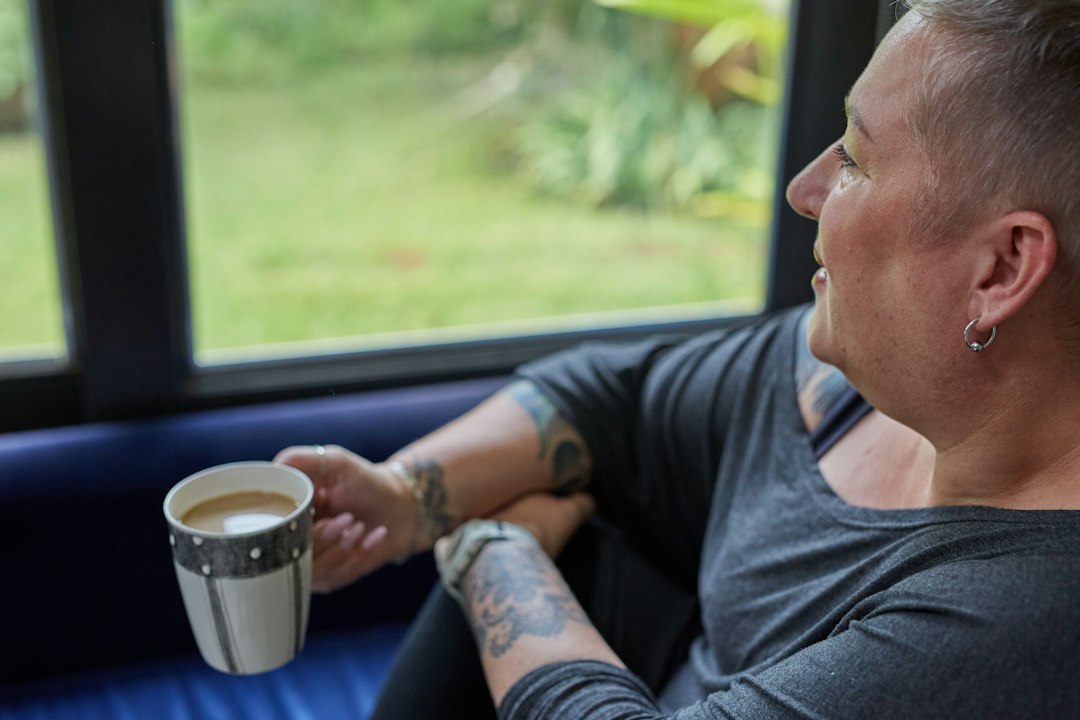
“You are not broken. You are not a bad mother. You are a woman whose brain chemistry shifted, and nobody warned you it could happen like this.”
Listen, sis. If you just had a baby and you feel like you are drowning while everyone around you keeps saying “enjoy every moment,” we need to talk about postpartum depression. Because what you are feeling might not be the baby blues, and the difference matters more than you know.
You expected the sleepless nights. You expected the leaking, the feeding struggles, the identity shift. What you did not expect was the emptiness. The rage. The feeling that you are watching yourself from outside your body and you cannot get back in.
That is not a character flaw. That is not you failing at motherhood. That is postpartum depression, and it is a medical condition that deserves real treatment.
So What Is the Difference Between Baby Blues and Postpartum Depression?
Up to 80 percent of new moms get the baby blues. It hits around day three, peaks around day five, and usually fades by week two. You cry easily, you feel overwhelmed, you are emotional. That is hormonal whiplash, and it passes.
Postpartum depression is different. It does not fade. It digs in. It can start any time in the first year after birth, sometimes even later. And it does not always look like sadness.
For a lot of women, postpartum depression shows up as rage. You snap at your partner over nothing. You feel numb when you look at your baby. You cannot sleep even when the baby is sleeping. You feel like everyone would be better off without you. Yeah, that is not the baby blues. That is your body asking for help.
💡 Quick Tip
Do a quick self-check right now. The Edinburgh Postnatal Depression Scale is a free 10-question screening tool used by doctors worldwide. You can find it online in two minutes. If you score above 10, call your OB or midwife this week. Not next month. This week.
Why Nobody Talks About Postpartum Depression Honestly
Because we live in a culture that puts mothers on a pedestal and then abandons them the second the baby is born. You get a baby shower, then you get silence. You get “congratulations,” then you get “why are you so tired, just sleep when the baby sleeps.”
Here is what nobody says out loud: postpartum depression is one of the most common complications of childbirth. According to the CDC, about 1 in 8 women experience symptoms of postpartum depression. And that number is likely higher because so many women never report it.
Black women are twice as likely to experience postpartum depression but half as likely to receive treatment. Let that sink in. The system is not built to catch us, so we have to catch each other.
1 in 8 women experience postpartum depression. You are not the only one in your friend group going through this.
What Actually Works When You Are in It
First, stop trying to push through it alone. Postpartum depression is not something you can mindset your way out of. You cannot journal your way out of a hormone crash and a neurotransmitter imbalance. You need support, and that is not weakness.
Talk to your doctor. Your OB, your midwife, your primary care provider — any of them can screen you and start the conversation. Therapy is the first line of treatment, and it works. Cognitive behavioral therapy specifically has strong evidence behind it for postpartum depression.
If medication is part of your plan, know that many antidepressants are considered safe during breastfeeding. You do not have to choose between your mental health and feeding your baby. That is outdated advice, and it keeps too many women suffering in silence.
💊 What Works: this top-rated pick – A guided postpartum mental health journal with prompts designed by therapists. Not a replacement for treatment, but a real tool for tracking your mood and bringing clearer information to your doctor.
Sleep is not a luxury, it is medicine. I know everyone says “sleep when the baby sleeps” and you want to scream. But sleep deprivation makes postpartum depression worse, and worse postpartum depression makes sleep harder. Break the cycle by taking shifts with your partner, hiring a night doula if you can, or calling in family for one overnight a week. One solid stretch of sleep changes everything.
Move your body, but gently. A ten-minute walk outside with the baby counts. Sunlight and movement are real mood regulators. You are not training for anything. You are just reminding your nervous system that you are safe.
The Truth Nobody Tells You About Postpartum Depression
Here is the part that gets buried: postpartum depression does not always end when your baby turns one. It can linger. It can come back with your next pregnancy. It can show up as anxiety that keeps you up at night checking if the baby is breathing. It can look like intrusive thoughts that terrify you and make you feel like a monster.
Those thoughts do not make you dangerous. They make you symptomatic. There is a difference, and a good therapist will help you see it.
“Asking for help is not the opposite of being a good mother. It is the definition of one.”
And if you are the friend or sister or coworker reading this because someone you love just had a baby, pay attention. Postpartum depression hides well. Ask her how she is really doing. Not “how is the baby,” but her. Bring food. Take the baby for an hour. Send a text that says “you do not have to respond, I just want you to know I am thinking of you.”
Postpartum Depression and Your Career — Yes, They Are Connected
If you are heading back to work while managing postpartum depression, listen. You are allowed to ask for accommodations. You are allowed to use FMLA and short-term disability. You are allowed to tell your manager you need a lighter load for a season without giving your whole medical history.
The pressure to “bounce back” and prove you can do it all is a lie. Nobody does it all. The women who look like they have it together are outsourcing, asking for help, and protecting their energy. You can too.
If you are building a business or freelancing with a newborn, give yourself grace. Your output will not look the same for a few months, and that is okay. Postpartum depression treatment is not a pause on your ambition. It is what makes it sustainable.
Start Here
If you take one thing from this post, take this: do the screening today. Not tomorrow. Today. The Edinburgh Postnatal Depression Scale is free, takes two minutes, and gives you language for what you are feeling. Screenshot your score. Bring it to your doctor. Send it to a friend you trust.
Your Next Three Moves:
✅ Take the Edinburgh Postnatal Depression Scale screening tonight
✅ Call your OB or midwife and say the words “I think I have postpartum depression”
✅ Tell one person in your life what you are actually feeling — not the highlight reel
This is the kind of stuff women talk about inside TechMae every single day. No judgment, just real ones keeping it real.
Related: This post is a must-read for women on their journey.
You might also love this article – one of our most shared.
This Is Your Sign to Stop Doing It Alone
Women inside TechMae have been exactly where you are. Come find your people.