“I spent years apologizing for something my brain was doing on autopilot. The apology was never the problem — the shame was.”
Girl, I need to tell you something I wish somebody had told me five years ago: you do not owe anyone an apology for your anxiety. Not your manager. Not your partner. Not the group chat. Not even yourself.
For the longest time, I thought saying “sorry, I’m just anxious” made me relatable. Like if I got out ahead of it, people wouldn’t judge me for being “too much.” Spoiler: it didn’t protect me. It just taught everyone around me that my anxiety was something to be managed, excused, and quietly tolerated.
So let me keep it 100 with you. This is how I stopped apologizing for my anxiety — and what actually changed when I did.
Why You Keep Apologizing for Your Anxiety (and Why It’s Not Your Fault)
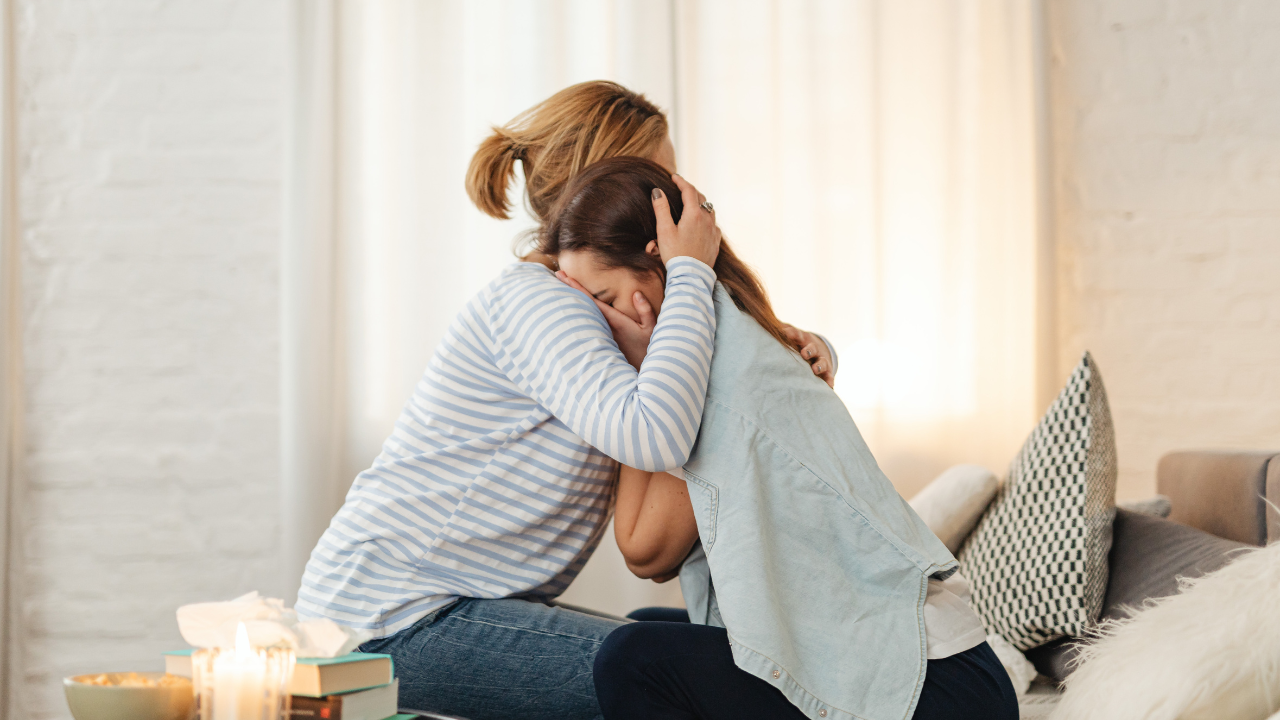
Here’s the thing nobody says out loud: a lot of us were trained to apologize for taking up space. For having needs. For being anything other than easygoing and low-maintenance. So when anxiety shows up — in a meeting, on a date, before a big pitch — the reflex is to shrink and say sorry.
But apologizing for your anxiety is like apologizing for having a pulse. It’s a nervous system response. It’s not a character flaw, and it’s definitely not something you need to get permission to have.
And listen — anxiety is not rare. According to the National Alliance on Mental Illness, over 40 million adults in the U.S. deal with an anxiety disorder in any given year. Yeah, that is wild, right? That means the woman next to you in the meeting, the one who looks like she has it all together, is probably managing her own anxiety too. She just got better at hiding it.
💡 Quick Tip
Next time you catch yourself about to say “sorry, I’m just anxious,” swap it for “I’m feeling anxious right now, and I’m handling it.” Same honesty, zero apology. Try it once this week and notice how different it feels in your body.
The Apology Tax You’re Paying (and Didn’t Even Know It)
Every time you apologize for your anxiety, you pay a tax. It shows up in your paycheck, your relationships, and your peace of mind.
At work, it looks like you not asking for the raise because you’re “too anxious to negotiate.” It looks like you saying yes to extra projects because you’re scared of seeming difficult. It looks like you over-explaining yourself in emails so nobody misreads your tone.
In your relationships, it looks like you apologizing for needing reassurance. For needing a minute to yourself. For not being the fun, spontaneous version of yourself every single day.
And the worst part? The more you apologize, the more you teach yourself that your anxiety is a problem to be fixed rather than a signal to be understood. That’s the trap, sis. That’s the cycle.
| Apologizing for Anxiety | Owning Your Anxiety |
|---|---|
| ❌ “Sorry, I’m just anxious.” | ✅ “I’m feeling anxious, and I’ve got a plan.” |
| ❌ Over-explaining yourself to be understood | ✅ Setting clear boundaries without the backstory |
| ❌ Avoiding opportunities because of the fear | ✅ Asking for what you need to show up well |
The Tools That Actually Helped Me Manage My Anxiety
Before I get into the mindset shifts, let me give you something tangible. Because sitting with your anxiety is real work, and sometimes you need a little backup.
💊 What Works: An anxiety journal with guided prompts – I started using one about two years ago, and it changed how I process anxious thoughts. Writing it down takes the thought out of the spiral and puts it somewhere you can actually look at it. It’s not therapy, but it’s a daily tool that helps you see patterns instead of panicking in them.
What Actually Works: The Four Shifts That Changed Everything
Okay, now let’s get into the real stuff. These are the shifts that took me from apologizing for my anxiety to actually understanding it.
Shift #1: Name it without apologizing for it. Instead of “sorry, I’m being weird,” try “I’m feeling anxious right now.” That’s it. No explanation. No apology. No asking for permission. You’re just stating a fact about your state, the same way you’d say “I’m hungry” or “I’m tired.” The more you practice this, the less power anxiety has over the room.
Shift #2: Separate the feeling from the story. Anxiety loves to tell you a story. “They’re mad at you.” “You’re going to fail.” “You’re not cut out for this.” But the feeling is just a feeling. It’s a wave in your body — tight chest, racing thoughts, restless energy. You can feel the wave without believing the story. That’s the whole game.
Shift #3: Ask for what you need instead of apologizing for what you don’t have. Instead of “sorry I need to step out,” try “I need five minutes, I’ll be back.” Instead of “sorry I’m not more flexible,” try “this is what I can commit to right now.” You are not asking for too much. You’re asking for what you need to show up as your best self.
Shift #4: Build a toolkit before you need it. Anxiety doesn’t wait for a convenient time. So you need a plan before the spiral hits. For me, that’s a 4-7-8 breathing exercise, a five-minute walk, and a note in my phone that says “you’ve survived every single time before this.” Your toolkit will look different, but you need one. Girl, write it down today.
Anxiety is not a flaw. It’s information. The question is whether you’re listening — or apologizing.
The Truth Nobody Tells You About Anxiety at Work
Here’s the insider truth: the women who seem the most “put together” at work are often the ones managing the most anxiety. They just learned to channel it into preparation, boundaries, and clear communication instead of apologizing for it.
I used to think my anxiety made me look weak. But the longer I sat in rooms with senior women, the more I realized that the ones I admired most were not anxiety-free. They were just unashamed. They didn’t apologize for needing to prep. They didn’t apologize for asking questions. They didn’t apologize for protecting their time.
And that’s the shift, sis. The goal is not to become a person who never feels anxious. The goal is to become a person who doesn’t shrink when she does.
“You are not too much. You are not broken. You are a woman who is learning how to hold both her ambition and her anxiety at the same time — and that is a skill, not a flaw.”
How to Stop Apologizing for Your Anxiety in Real Life
Let’s make this practical. Here’s how to actually put this into motion this week, not someday.
1. Audit your apologies. For one full day, notice every time you say “sorry” and what you’re apologizing for. You’ll be surprised how many of them are tied to your anxiety. Write them down. That list is your starting point.
2. Practice the swap. Take one apology from your list and rewrite it without the apology. “Sorry I’m so anxious about this” becomes “I’m feeling anxious about this, so I’m going to take a few minutes to prepare.” Say it out loud in the mirror. It feels awkward at first. Do it anyway.
3. Tell one person. Find one safe person — a friend, a mentor, a therapist — and tell them you’re working on this. You don’t need to announce it to the world. You just need one person who can hold you accountable and remind you when you slip back into apologizing.
4. Get professional support if you need it. Listen, this is not a DIY situation for everyone. If anxiety is interfering with your sleep, your work, your relationships, or your ability to function, please talk to a licensed therapist or your doctor. Psychology Today’s therapist directory is a great place to start, and many therapists offer sliding scale rates. There is no shame in getting help. That’s not weakness — that’s wisdom.
Why This Works:
✅ It gives you a script so you’re not fumbling in the moment
✅ It shifts you from passive to active about your own mental health
✅ It builds self-trust — you start believing you can handle what comes up
✅ It models healthy behavior for the women watching you
What Changes When You Stop Apologizing
When I stopped apologizing for my anxiety, I didn’t become a different person. I became more myself. I stopped over-explaining. I stopped shrinking in meetings. I stopped treating my nervous system like an inconvenience and started treating it like information.
And the people around me responded differently too. Not because I changed them — because I changed the energy I brought into the room. When you stop apologizing for who you are, people stop treating you like you should be sorry.
You don’t have to be fearless. You don’t have to be perfectly regulated. You just have to stop apologizing for the parts of you that are still learning, still healing, still showing up. That’s the work, sis. And you’re already doing it.
This is the kind of stuff women talk about inside TechMae every single day. No judgment, just real ones keeping it real.
Related: This post is a must-read for women on their journey.
Start Here
If you take one thing from this, let it be this: catch yourself the next time you’re about to apologize for your anxiety. Pause. Take a breath. And say what’s true instead of what’s small.
You are allowed to feel anxious. You are allowed to need support. You are allowed to take up space while you figure it out. And you do not owe anyone an apology for any of it.
You might also love this article – one of our most shared.
This Is Your Sign to Stop Doing It Alone
Women inside TechMae have been exactly where you are. Come find your people.