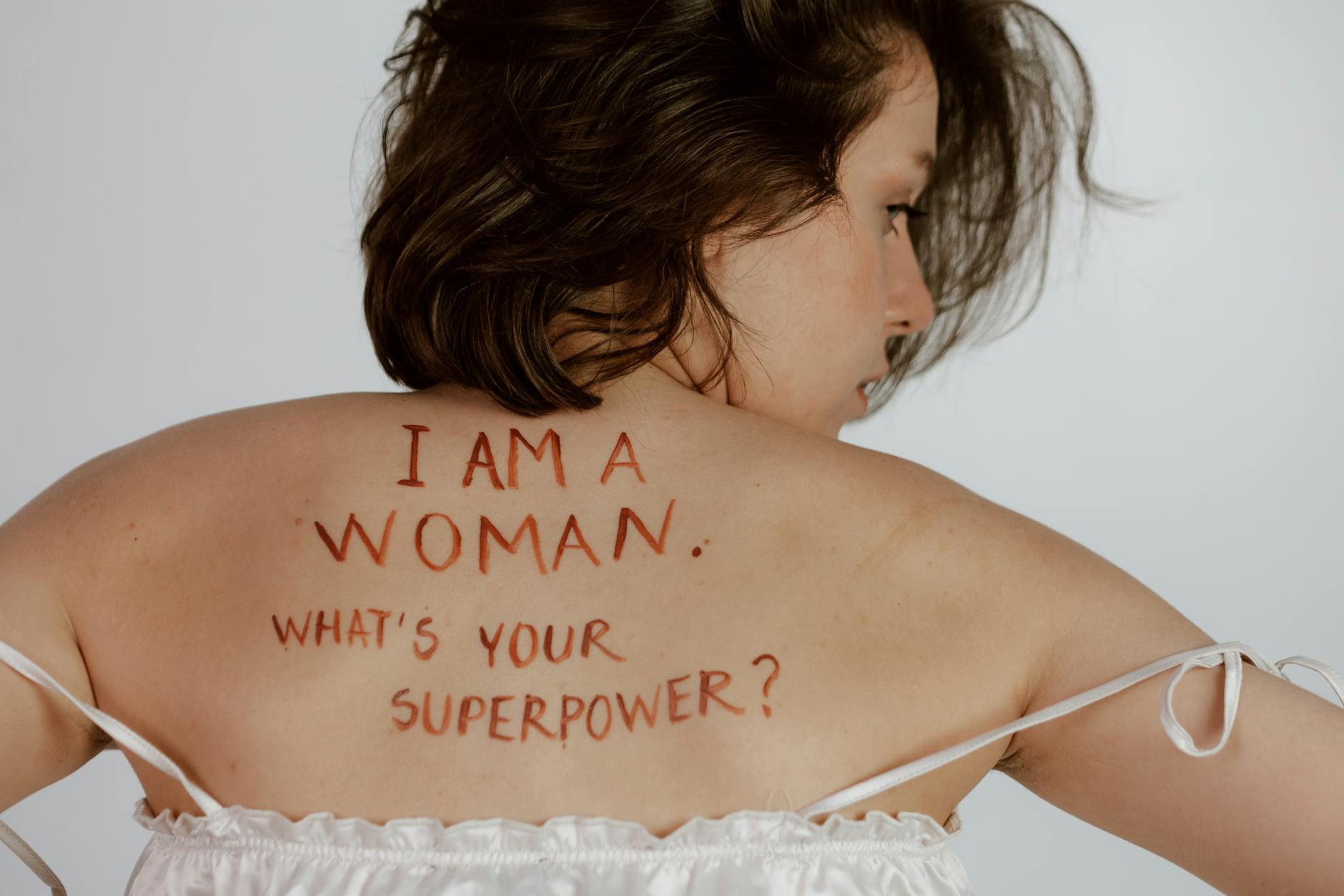

“The only thing you have to prove is that you belong at the table — and sis, you already do.”
Let’s talk about that voice in your head. You know the one. It whispers that you got lucky, that you’re about to be exposed, that everyone else has it figured out but you’re just faking it. That, girl, is imposter syndrome — and it is lying to you straight to your face.
I remember sitting in my first real job meeting, heart pounding, convinced my manager was going to realize they hired the wrong person. I had the degree, the internship experience, the portfolio — and none of it mattered because my brain kept saying, they’re going to find out. Sound familiar?
Here’s the thing nobody tells you: imposter syndrome does not mean you’re inadequate. It means you’re stepping into spaces that stretch you. And stretching? That’s how you grow. But let’s break this down so you can actually start shutting that voice up.
What Is Imposter Syndrome Actually Doing to You?
Imposter syndrome is not just a buzzword you see on Instagram infographics. It is a real psychological pattern where you doubt your accomplishments and have a persistent fear of being exposed as a fraud. And here is the kicker — it hits young women harder than anyone.
A study from the International Journal of Behavioral Science found that up to 70% of people experience imposter syndrome at some point. But for women in their teens and twenties? That number climbs even higher. You are juggling tuition payments, roommate drama, first jobs, dating apps, social media pressure, and trying to figure out who you even are. Yeah, no wonder your brain is screaming.
70% of people experience imposter syndrome. You are not broken. You are human.
Let that sink in. Seven out of ten people you walk past on campus or in the office feel the exact same way. The girl in your lecture who always raises her hand? She is scared too. The intern who seems so confident in Slack? She is googling “how to write a professional email” at 2 AM just like you.
The problem is not that you feel like an imposter. The problem is that you believe the feeling is true. And that is where we start fixing this.
The Five Faces of Imposter Syndrome — Which One Is You?
Dr. Valerie Young, who literally wrote the book on imposter syndrome, identified five types. And sis, I bet you recognize yourself in at least one.
The Perfectionist: You set impossibly high standards and any mistake feels like proof you are a fraud. You re-read emails five times before sending. You stay up until 3 AM tweaking a project that was already good.
The Superwoman/Superman: You push yourself to work harder and longer than everyone else because you think you have to prove you deserve your spot. You say yes to everything even when you are exhausted.
The Natural Genius: You think you should get things right on the first try. If something takes effort, you assume you are not cut out for it. You quit hobbies and classes the moment they get hard.
The Soloist: You refuse to ask for help because you think needing help means you are incompetent. You struggle in silence when a quick question could save you hours.
The Expert: You think you need to know everything before you can even start. You keep taking courses and certifications instead of actually applying for the job or starting the project.
💡 Quick Tip
Pick the type that hits closest to home. Write it down. Name it. Every time that voice shows up, say “Oh, that is my Perfectionist talking again.” Naming it takes away its power. Try it today — seriously, text yourself the name right now.
I am a mix of the Soloist and the Expert. For years, I refused to ask my boss for clarification because I thought it would make me look dumb. And I spent months taking “one more course” before applying for the promotion I was already qualified for. Sound like a waste of time? Because it was.
Why Your Brain Is Gaslighting You
Here is the science part — but I promise it is relevant to your actual life. Imposter syndrome is linked to something called the Dunning-Kruger effect. That is a fancy way of saying that people who are less competent tend to overestimate their abilities, while people who are more competent tend to underestimate theirs.
Translation? The fact that you are worried about being a fraud is actually a sign that you are competent. The people who truly do not know what they are doing? They are not sitting around questioning themselves. They are out there confidently being wrong.
You, on the other hand, are self-aware enough to recognize what you do not know. That is not weakness. That is the foundation of growth. But your brain has twisted it into a weapon against you.
“The fact that you are worried about being a fraud is actually a sign that you are competent. The people who truly do not know what they are doing? They are not sitting around questioning themselves.”
What Actually Works to Silence Imposter Syndrome
I am not going to tell you to “just believe in yourself” or “manifest your confidence.” That is not how imposter syndrome works. You cannot think your way out of a pattern that your brain has been reinforcing for years. You have to act your way out.
Here are the real strategies that actually moved the needle for me and for the thousands of women in the TechMae community:
1. Collect evidence like a lawyer. Imposter syndrome thrives on feelings. Facts kill feelings. Start a folder on your phone — call it “Proof I Belong” or whatever feels right. Screenshot the email where your professor said your paper was excellent. Save the Slack message where your coworker thanked you for your help. Write down the grade you got on that exam you were sure you failed. When the voice starts whispering, open that folder and read the receipts.
2. Stop comparing your behind-the-scenes to everyone else’s highlight reel. This one is huge. You see your classmate’s Instagram post about landing an internship and immediately feel like you are behind. But you do not see the 40 rejections they got before that one yes. You do not see the panic attack they had in the bathroom before the interview. Social media is a curated highlight reel, and you are comparing it to your raw footage. Stop it.
3. Talk about it out loud. Imposter syndrome loves secrecy. It grows in the dark. The moment you say “I feel like I do not belong here” to a trusted friend, mentor, or even a stranger in a support group, it loses power. You will almost always hear “Wait, me too.” And suddenly you are not alone anymore.
4. Do it scared. This is the hardest one. You will never feel ready. You will never feel qualified enough. The goal is not to eliminate the fear — the goal is to take the action despite the fear. Apply for the job even though your hands are shaking. Raise your hand in the meeting even though your voice cracks. The confidence comes after the action, not before.
💊 What Works: The Gifts of Imperfection by Brené Brown – This book literally rewired how I think about worthiness and belonging. It is not fluffy self-help. It is research-backed, real talk about letting go of who you think you are supposed to be. Read it with a highlighter.
The Truth Nobody Tells You About Imposter Syndrome
Here is the part that changed everything for me. Imposter syndrome does not ever fully go away. I know that is not what you wanted to hear, but stick with me.
I have been in my career for years now. I have led teams, spoken on stages, built a community of thousands of women. And I still get that flutter in my chest before a big presentation. I still have moments where I wonder if I am qualified to be giving advice.
The difference is that I no longer let that feeling make my decisions. I feel the fear, I acknowledge it, and then I do the thing anyway. Imposter syndrome is not a stop sign. It is a speed bump. You slow down, you take a breath, and you keep driving.
“Imposter syndrome is not a stop sign. It is a speed bump. You slow down, you take a breath, and you keep driving.”
The women who succeed are not the ones who never feel like imposters. They are the ones who show up anyway. They are the ones who apply for the job with 70% of the qualifications instead of 100%. They are the ones who ask the “dumb” question in class and realize it was actually a good one.
And here is something else nobody tells you: a little bit of imposter syndrome can actually be useful. It keeps you humble. It keeps you hungry. It makes you prepare harder and work smarter. The goal is not to eliminate it completely — the goal is to stop letting it run your life.
How TechMae Helps You Fight Imposter Syndrome Every Day
This is the kind of stuff women talk about inside TechMae every single day. No judgment, just real ones keeping it real. We have entire threads where women post their wins — big and small — and the community shows up to celebrate. We have discussions about the exact strategies I just shared, with real women giving real feedback on what worked for them.
You do not have to fight imposter syndrome alone in your dorm room or your apartment. That is what makes it so loud — the isolation. When you have a community of women who get it, the voice gets quieter. Because you realize that every single one of them has felt the exact same way.
Related: This post is a must-read for women on their journey — because sometimes the best way to beat imposter syndrome is to prove to yourself that you can build something from scratch.
Start Here: Your 5-Minute Imposter Syndrome Reset
You do not need a full day of therapy to start shifting this pattern (though therapy is amazing if you have access to it). You need one small action. Right now.
Open your notes app or grab a piece of paper. Write down one thing you accomplished this week that you are proud of. It can be tiny — you showed up to class, you sent that email you were avoiding, you cooked a meal instead of ordering DoorDash again. Whatever it is, write it down.
Now read it out loud to yourself. Say “I did that.” Feel how uncomfortable that is? Good. That is the imposter syndrome squirming. Keep doing it. Every day. Build that muscle.
Why This Works:
✅ It trains your brain to look for evidence of competence instead of evidence of fraud
✅ It creates a tangible record you can look back on when the voice gets loud
✅ It builds the habit of self-acknowledgment, which is the direct antidote to imposter syndrome
You might also love this article — one of our most shared. It walks you through exactly how to use journaling to untangle the thoughts that imposter syndrome feeds on.
What Happens When You Stop Letting Imposter Syndrome Win
I want you to picture something. Imagine you wake up tomorrow and that voice is just… quieter. Not gone, but quieter. You still feel nervous before your presentation, but you do it anyway. You still doubt yourself before applying for the scholarship, but you hit submit anyway. You still feel like you do not quite belong, but you show up anyway.
That is not a fantasy. That is what happens when you start treating imposter syndrome like what it is — a liar. A loud, persistent, convincing liar. But a liar nonetheless.
The women who get ahead are not the ones who never feel like imposters. They are the ones who refuse to let that feeling dictate their choices. And you can be one of them. You already have everything you need. You just have to start believing the evidence instead of the fear.
You belong at that table. You earned your seat. And the sooner you start acting like it, the sooner that voice will have no choice but to shut up.
This Is Your Sign to Stop Doing It Alone
Women inside TechMae have been exactly where you are. Come find your people — the ones who will remind you that you are not an imposter, you are exactly where you are supposed to be.
Sis, I am so proud of you. For reading this. For being willing to look at this thing head-on. That alone tells me you are not a fraud — you are someone who is growing. And that is the most real thing you can be.